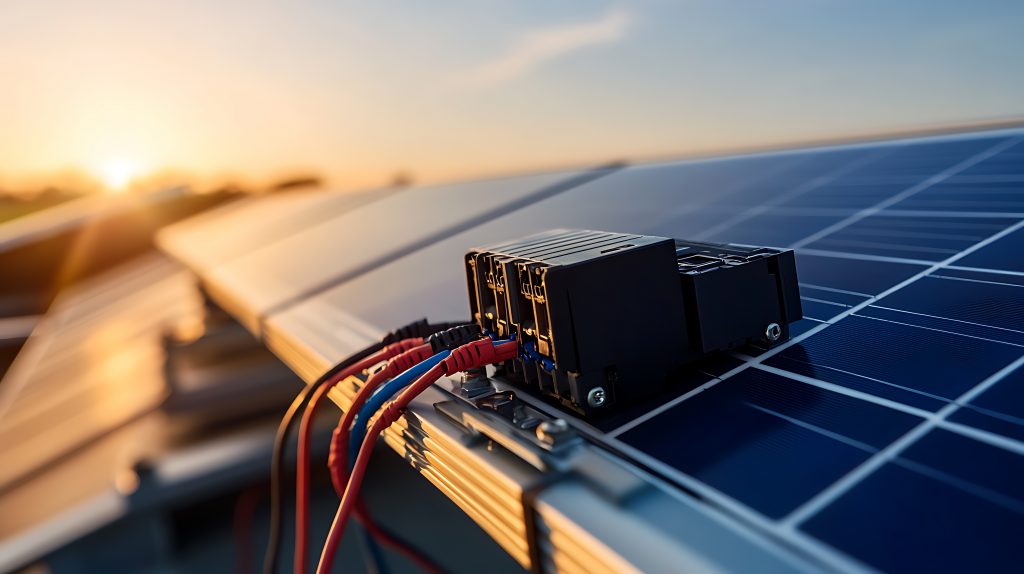
Renewable energy electronics are no longer limited to utility-scale infrastructure or high-voltage grid systems. Across the United States, growth is accelerating in low-voltage, device-level renewable energy products — from solar-powered phone chargers and outdoor lighting to compact controllers and heating devices. These products operate in the 12V, 24V, and standard 120V–220V ranges, making them fundamentally different from smart grid or utility-scale power electronics.
For OEMs developing these products, the challenge is not managing megawatts of power. It is designing reliable, efficient, and durable PCBs that perform consistently in small, often portable, renewable energy devices. Thomas Instrumentation specializes in this space, supporting the design and manufacturing of electronics built specifically for low-voltage renewable energy applications where efficiency, reliability, and manufacturability are critical.
This article refocuses renewable energy electronics away from high-voltage infrastructure and toward the practical world of solar-powered and renewable energy devices, where thoughtful PCB design directly impacts product success.
The Shift Toward Device-Level Renewable Energy Electronics
Renewable Energy Is Becoming Personal and Portable
While large-scale solar farms and grid infrastructure dominate headlines, consumer and light-industrial renewable energy devices represent a rapidly expanding market. Products such as:
- Solar-powered phone chargers and power banks
- Renewable energy charge controllers
- Solar-powered outdoor lights and signage
- Compact solar heaters and auxiliary power devices
are increasingly used by homeowners, outdoor enthusiasts, emergency preparedness customers, and off-grid users.
According to the International Energy Agency, distributed and small-scale renewable energy systems are among the fastest-growing segments of the clean energy market, driven by affordability and ease of deployment.
Why Low Voltage Changes the Engineering Conversation
Low-voltage renewable energy electronics operate under very different constraints than high-voltage grid equipment. Instead of managing transmission-level power, designers must focus on:
- Power efficiency at low currents
- Battery charging and protection
- Voltage regulation and conversion
- Environmental exposure and durability
- Compact form factors
This makes PCB design central to product performance, especially when devices must operate reliably with limited and variable power sources like solar panels.
Common Low-Voltage Renewable Energy Devices
Solar-Powered Chargers and Power Banks
Solar chargers and power banks convert intermittent solar input into usable stored energy. These devices typically operate in the 5V to 24V range, relying on efficient electronics to maximize energy capture.
PCB responsibilities include:
- Maximum power point tracking (MPPT) or simplified charge control
- Battery management and protection
- USB or DC output regulation
- Load balancing and thermal control
Poor PCB design can result in slow charging, overheating, or shortened battery life — all of which directly affect user satisfaction.
Renewable Energy Controllers
Charge controllers and small energy management modules are essential for protecting batteries and regulating power flow in off-grid systems.
These devices often support:
- 12V or 24V battery systems
- Overcharge and over-discharge protection
- Load control and monitoring
- Fault detection and status indication
Reliable PCB assembly ensures consistent performance under fluctuating input conditions.
Solar-Powered Lighting and Signage
Solar-powered lights and signs are widely used in residential, commercial, and municipal environments. While the power levels are modest, reliability expectations are high.
PCB considerations include:
- Ultra-low-power standby operation
- LED driver efficiency
- Environmental sealing and corrosion resistance
- Long-term operation without maintenance
Electronics failure in these products often results from poor component selection or inadequate protection from moisture and temperature extremes.
Compact Renewable Heating and Auxiliary Devices
Smaller renewable heating products and auxiliary power devices often combine solar input with standard household voltage systems.
PCB assemblies in these products must manage:
- Safe voltage transitions between sources
- Temperature sensing and control
- Protective shutdown mechanisms
Low-voltage design discipline remains essential even when devices interface with 120V–220V systems.
PCB Design Considerations for Low-Voltage Renewable Energy
Efficiency Is the Primary Design Driver
In low-voltage renewable energy devices, every fraction of a watt matters. Inefficient PCB layouts, poor component selection, or excessive losses can dramatically reduce usable output.
Efficiency-focused PCB design emphasizes:
- Short, low-resistance power paths
- Optimized copper weight and trace width
- High-efficiency regulators and converters
- Minimizing parasitic losses
From first-hand experience in renewable device development, small layout improvements often yield meaningful gains in real-world performance.
Power Regulation and Conversion
Renewable inputs are rarely stable. Solar output varies with light conditions, angle, and temperature. PCBs must manage this variability without compromising downstream electronics.
Key PCB functions include:
- DC-DC conversion
- Voltage clamping and protection
- Smooth transitions between charging and load states
Stable power delivery is essential for protecting batteries and connected devices.
Battery Management and Safety
Many low-voltage renewable energy devices rely on rechargeable batteries. Improper battery management is a leading cause of failure and safety incidents.
PCB-based battery management systems support:
- Charge rate control
- Temperature monitoring
- Short-circuit and overload protection
- Safe cutoff thresholds
Well-designed PCB assemblies reduce risk while extending battery life.
Environmental Durability for Renewable Devices
Outdoor and Portable Exposure
Unlike indoor electronics, renewable energy devices are often used outdoors or in semi-protected environments. PCBs must withstand:
- Temperature swings
- Moisture and humidity
- Dust and debris
- UV exposure over time
Protective measures such as conformal coating and proper enclosure integration are critical.
Designing for Long Service Life
Many renewable energy products are expected to operate unattended for years. PCB reliability directly affects the total cost of ownership and brand reputation.
Durability-focused design includes:
- Conservative component derating
- Robust solder joints
- Stable thermal profiles
Failure rates increase significantly when electronics are pushed too close to their limits.
Manufacturing Advantages for USA-Based Renewable Energy Electronics
Consistency and Quality Control
Low-voltage renewable energy devices depend on consistent performance across large production runs. Variability in assembly quality can lead to inconsistent charging behavior or premature failure.
USA-based manufacturing supported by professional electronics manufacturing capabilities helps ensure consistent product quality.
USA-based manufacturing supports:
- Tight process control
- Repeatable assembly quality
- Faster resolution of design or production issues
For OEMs, this consistency is essential when scaling consumer-facing products.
Collaboration During Design and Production
Renewable energy device development often involves iteration — adjusting layouts, components, or firmware to improve efficiency and reliability.
Domestic manufacturing allows:
- Faster design feedback
- Easier prototyping and validation
- Close collaboration between engineering and production
Thomas Instrumentation works with OEMs to ensure PCB design aligns with both performance goals and manufacturability through integrated electronics engineering and manufacturing services.
Compliance and Safety in Low-Voltage Renewable Electronics
Meeting Consumer and Commercial Standards
Even low-voltage devices must meet safety and performance expectations. PCB design plays a role in supporting compliance with:
- Electrical safety standards
- EMC and interference requirements
- Consumer product reliability expectations
Designing with compliance in mind reduces risk during certification and market release.
Protecting End Users
Reliable electronics protect not only the product, but also the user. Proper isolation, protection circuitry, and fail-safe behavior are critical — even at lower voltages.
Strong production processes such as quality assurance in contract manufacturing help ensure safety, durability, and consistent performance.
Who Benefits from Low-Voltage Renewable PCB Expertise
This focused approach to renewable energy electronics is ideal for:
- Consumer renewable energy product OEMs
- Outdoor and portable power device manufacturers
- Off-grid and emergency preparedness product developers
- Smart home and residential energy accessory brands
These markets demand efficient, durable, and cost-effective electronics rather than utility-scale infrastructure expertise.
What OEMs Should Look for in a PCB Partner
When sourcing PCB design and manufacturing for low-voltage renewable energy devices, OEMs should prioritize:
- Experience with low-voltage power electronics
- Understanding of solar and renewable input behavior
- Emphasis on efficiency and durability
- USA-based manufacturing and collaboration
- Support for design refinement and scaling
Thomas Instrumentation focuses on exactly this intersection — renewable energy devices where electronics quality defines product success.
FAQs About Low-Voltage Renewable Energy Electronics
What voltage ranges are considered low voltage for renewable devices?
Typically 12V, 24V, and devices interfacing with standard 120V–220V household systems after conversion.
Why is PCB efficiency so important in solar-powered devices?
Solar input is limited and variable, so inefficient electronics directly reduce usable power and performance.
Are low-voltage renewable devices easier to design than high-voltage systems?
They involve different challenges. While voltages are lower, efficiency, battery safety, and durability are often more demanding.
Do outdoor renewable devices require special PCB protection?
Yes. Moisture, temperature changes, and UV exposure require protective coatings and robust design practices.
Why choose USA-based PCB manufacturing for renewable devices?
Domestic manufacturing offers better quality control, faster iteration, and closer collaboration during development.
Powering the Next Generation of Renewable Devices
Renewable energy innovation is increasingly happening at the device level — in products people use every day. Solar chargers, lights, controllers, and compact renewable systems rely on well-designed, low-voltage PCB assemblies to deliver reliable performance from limited energy sources.
By focusing on the practical realities of 12V to 24V renewable energy electronics, Thomas Instrumentation supports OEMs building efficient, durable, and scalable products. In this growing segment of renewable technology, success is driven not by grid-scale voltage, but by intelligent design, quality manufacturing, and electronics that make the most of every watt.