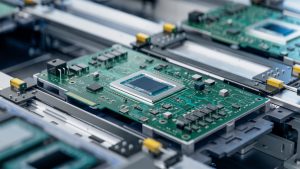
Data acquisition systems convert physical phenomena into digital data. Temperature, pressure, strain, flow, voltage, current, vibration, and dozens of other physical quantities are measured by sensors whose outputs are conditioned, amplified, filtered, and converted to digital form by the electronics inside the acquisition system. A system that introduces noise into a sensor signal, that drifts under changing thermal conditions, or that loses calibration between service intervals does not simply underperform. It produces data that misrepresents the physical reality it was designed to measure, and decisions made on the basis of that data inherit the error without knowing it. At Thomas Instrumentation, we design and manufacture precision printed circuit board (PCB) assemblies for data acquisition applications where measurement accuracy, calibration stability, and long-term reliability are engineering requirements, not marketing claims.
This article covers what precision PCB assembly for data acquisition systems actually demands, the engineering and manufacturing decisions that determine whether a system produces accurate and repeatable results, and why manufacturers in this space benefit from working with an integrated U.S.-based electronics partner.
What Data Acquisition Electronics Must Get Right
Every stage of the signal chain introduces potential error, and the total measurement accuracy of the system is the accumulated result of how well each stage manages its contribution to the error budget.
Signal conditioning is often the first stage where measurement accuracy is either preserved or compromised. Poor circuit design here can allow environmental noise to creep into the signal, introduce fixed offsets, or unintentionally remove important parts of the data. These types of errors are best addressed through thoughtful engineering choices during the design phase, rather than relying solely on component swaps or process improvements later.
Analog-to-digital conversion (ADC) is where the real world meets the digital one, and it always introduces some fundamental limitations like quantization error. Additional performance issues such as noise, distortion, and timing jitter depend heavily on the design choices. Selecting a good ADC is important, but it’s only part of the story. Its real-world performance in the final system depends on a stable reference, clean power, careful PCB layout, and high-quality signal conditioning. Even an ADC with impressive datasheet specifications can fall short if these elements aren’t properly addressed.
According to the Institute of Electrical and Electronics Engineers (IEEE) standard for instrumentation amplifiers and data acquisition systems, total system accuracy must be evaluated through a complete error budget analysis that accounts for all error sources across the full signal chain under the full range of operating conditions. This is the engineering discipline that separates data acquisition electronics that deliver their specified accuracy from those that appear to do so under favorable conditions and fail to do so under the conditions that matter in the field. Why precision matters in laboratory equipment manufacturing covers the precision engineering principles that underpin accurate data acquisition and electronics design.
PCB Layout as a Precision Engineering Discipline
In data acquisition electronics, PCB layout is not a mechanical exercise that follows schematic design. It is a precision engineering discipline that determines whether the assembled system achieves the performance its schematic predicts.
One of the most important layout principles in mixed-signal data acquisition systems is keeping analog and digital circuits properly separated. Digital circuits switch rapidly and inject noise into the ground plane and power rails that can easily produce errors in sensitive analog measurements if not carefully managed.
Reference voltage stability is critical for ADC accuracy. Even small amounts of noise or drift here can introduce errors and significantly impact overall system performance.
Sensitive sensor circuits with high-impedance nodes also require special attention in layout. Even very small leakage currents from adjacent traces can introduce noticeable errors in these circuits. Protecting these sensitive nodes from leakage and interference helps maintain signal accuracy and reliability.
Advanced circuit design for industrial applications provides additional context on the circuit design considerations that underpin precision electronics performance in demanding applications.
Calibration-Sensitive Manufacturing for Data Acquisition Systems
Data acquisition systems require calibration to establish the precise relationship between their digital output and the physical quantity being measured. The stability of that calibration over time and temperature determines the interval at which the system must be recalibrated to maintain its specified accuracy, which affects both the cost of ownership and the confidence that users can place in measurements taken throughout the calibration interval.
Manufacturing process consistency is a prerequisite for calibration stability across a production run. If component placement variability, solder joint quality variation, or board cleanliness inconsistency cause unit-to-unit performance variation that exceeds the adjustment range of the factory calibration procedure, individual units will require extended calibration adjustment that is time-consuming and may not fully compensate for the underlying process variability. Controlled manufacturing processes that minimize unit-to-unit variation are part of how we ensure that calibration-sensitive data acquisition electronics can be efficiently calibrated and maintain that calibration reliably in the field.
Automated Optical Inspection (AOI) and X-ray inspection provide the inspection coverage that verifies assembly quality for every unit. For data acquisition electronics where a single solder defect at a critical precision component can affect calibration results, systematic inspection is not optional. It is the minimum standard for ensuring that each assembled unit represents the design intent faithfully before calibration is performed.
Our programming, calibration, and functional testing services ensure that every data acquisition PCB assembly that leaves our facility has been calibrated to specification and functionally verified before shipment. The functional testing plan is developed with the customer to reflect the actual performance parameters of their system, so that what we verify at our facility corresponds to what the customer and their end users need the system to deliver in the field. The goal is straightforward: every unit ships fully operational and calibrated, with no failures that could have been caught at functional test reaching the customer. Quality assurance in contract manufacturing covers the inspection and verification processes that support consistent quality for precision electronics manufacturing.
Thermal Management for Calibration Stability
Temperature is the environmental variable that most directly affects the calibration stability of data acquisition electronics. Precision components including voltage references, precision resistors, instrumentation amplifiers, and ADCs all have temperature-dependent characteristics that cause their electrical behavior to change as temperature changes. When those changes occur, they affect the calibration relationship that was established at a reference temperature and can cause the system’s measurement accuracy to degrade as operating temperature varies from the calibration temperature.
Thermal management for calibration stability involves more than preventing component damage from excessive heat. It involves understanding the temperature coefficients of every critical component in the signal chain, evaluating the temperature variation that each component will experience during normal operation in the field, and ensuring that the accumulated effect of those temperature-dependent changes keeps total measurement error within the accuracy specification across the full operating temperature range.
Thermal isolation of precision components from heat-generating circuits reduces the temperature variation that those components experience during operation. Placing precision voltage references, ADCs, and instrumentation amplifiers away from heat sources on the PCB, using thermal breaks, and evaluating enclosure thermal behavior during the design process all contribute to a thermal environment for precision components that is as stable as practical given the operating conditions of the application.
In applications where calibration accuracy must be maintained across wide temperature ranges, temperature compensation techniques that measure the actual temperature of critical components and apply correction factors in firmware are an engineering approach that can achieve accuracy levels that passive thermal management cannot. This adds firmware complexity but can extend the useful calibration interval and the operating temperature range of the system beyond what is achievable with passive approaches alone. Our team evaluates thermal management strategy for every data acquisition project based on the accuracy requirements, operating temperature range, and calibration interval requirements of the specific application.
Supply Chain Management for Precision Component Availability
Precision data acquisition electronics depend on components that are manufactured to tighter specifications than standard commercial components and that may be available from a more limited number of qualified suppliers. Managing the supply chain for these components over the full production and field service lifecycle of the product requires proactive attention that goes beyond standard procurement practices.
Precision resistors, voltage references, instrumentation amplifiers, and high-resolution ADCs are components where performance specifications vary significantly between manufacturers and where substituting an alternative component without engineering evaluation can degrade system accuracy in ways that are not immediately apparent. Qualifying alternative components at the design stage, rather than when a primary supplier discontinues a part during production, preserves production continuity without the risk of unvalidated substitutions affecting calibration stability or measurement accuracy.
Component aging is a supply chain consideration that is specific to precision electronics. Some precision components exhibit initial aging behavior where their characteristics shift during the first months of operation before stabilizing. Understanding and accounting for this aging behavior during the design and calibration process ensures that the system’s accuracy at the time of factory calibration is representative of its accuracy after initial aging in the field rather than requiring early recalibration to compensate for initial drift. Navigating supply chain challenges in electronics manufacturing covers the proactive supply chain management approaches that protect production continuity for manufacturers with precision component requirements.
Security and Domestic Manufacturing for Data Acquisition Systems
Data acquisition systems often embody proprietary signal processing algorithms, calibration methodologies, and firmware that represent significant intellectual property investment. The security of that intellectual property depends on the security of the manufacturing process that programs and assembles the electronics.
At our facility in New Jersey, design files, firmware source code, calibration data, and production specifications for every customer project are accessible only to authorized personnel. The firmware programmed into each unit is the authorized production version, with no unauthorized modifications introduced during the manufacturing process. Component substitution without engineering authorization does not occur at our facility, which means the product that leaves our facility is the product that was designed, validated, and approved.
For data acquisition manufacturers competing on the basis of measurement accuracy and proprietary signal processing technology, this controlled manufacturing environment is a meaningful intellectual property protection advantage that complements the quality, calibration, and supply chain benefits of working with an integrated domestic electronics partner. Tariff and trade policy considerations also favor domestic manufacturing for manufacturers who need cost and availability predictability across long production runs and extended field service obligations. Made in the USA electronics manufacturing covers the supply chain and trade compliance considerations that are increasingly relevant for precision electronics manufacturers evaluating their sourcing strategies.
Frequently Asked Questions About Precision PCB Assembly for Data Acquisition Systems
What are the primary sources of measurement error in data acquisition electronics and how are they managed?
Measurement accuracy in data acquisition systems is influenced by several key error sources, including amplifier noise, common-mode interference, reference voltage stability, temperature effects, and noise from power and ground paths. These challenges are best addressed through careful engineering decisions during the design phase, including thoughtful component selection, optimized PCB layout, thermal management, and clean power distribution. The most effective approach involves analyzing the entire signal chain as a whole.
How does PCB layout affect data acquisition system accuracy?
PCB layout plays a major role in overall data acquisition accuracy. It directly influences noise coupling between digital and analog sections, reference voltage stability, parasitic effects at sensitive nodes, and the thermal environment around precision components. Even a system built with high-quality components can fall short of its potential if the layout allows digital noise to contaminate analog signals, disrupts the reference voltage, or subjects critical parts to unnecessary temperature variation. For best results, layout decisions deserve the same level of care and attention as component selection.
What manufacturing process controls are most important for calibration-sensitive data acquisition electronics?
Manufacturing process controls that most directly affect calibration-sensitive data acquisition electronics include solder joint quality and consistency, component placement accuracy, board cleanliness after assembly, and the programming and calibration process itself. Solder joint variability at precision component connections can introduce contact resistance and thermal resistance variation that affects calibration results unit to unit. Board contamination can introduce leakage currents at high-impedance nodes that shift calibration. Systematic AOI and X-ray inspection verify assembly quality before calibration is performed, ensuring that calibration reflects the intended circuit rather than a defective one. A controlled, documented calibration process applied consistently to every unit ensures that factory calibration is meaningful and reproducible.
How should component aging be accounted for in data acquisition system design?
Some precision components, including certain voltage references and precision resistors, exhibit initial aging behavior where their characteristics shift during the first period of operation before stabilizing at their long-term values. If factory calibration is performed immediately after assembly before initial aging has occurred, the calibration may not represent the system’s accuracy after aging in the field, requiring early field recalibration to restore specified accuracy. Accounting for component aging involves either performing factory calibration after a burn-in period that allows initial aging to complete, applying aging correction factors derived from characterization data to the factory calibration, or selecting components with documented low initial aging for critical applications. The appropriate approach depends on the component, the accuracy requirement, and the acceptable calibration interval for the application.
What is the advantage of integrated PCB design and manufacturing for precision data acquisition electronics?
Integrated PCB design and manufacturing for precision data acquisition electronics ensures that the manufacturing process is aligned with the design intent throughout every stage of production. When the engineering team that developed the design is in direct communication with the manufacturing team that produces it, manufacturing observations that affect design performance are fed back to engineering immediately rather than accumulating as undocumented process variations. Design decisions that have manufacturing implications are understood and addressed by the team that will implement them, rather than being discovered as production problems after the design is committed. For calibration-sensitive data acquisition electronics where unit-to-unit consistency directly affects calibration efficiency and field performance, this alignment between design and manufacturing is a meaningful quality advantage.
Why does domestic manufacturing matter for data acquisition systems with proprietary technology?
Data acquisition systems often contain proprietary signal processing algorithms, calibration methodologies, and measurement techniques that represent significant competitive value developed over years of engineering investment. When firmware, calibration data, and design files are processed exclusively at a controlled domestic facility with documented access restrictions, the risk of unauthorized access to that intellectual property is substantially lower than in a manufacturing model involving multiple offshore subcontractors with less controlled access. For manufacturers whose market position depends on proprietary measurement technology, IP protection is a genuine advantage of domestic manufacturing. Contact Thomas Instrumentation to discuss your data acquisition electronics design and manufacturing requirements.
Accuracy That Holds Up in the Field, Not Just in the Lab
Data acquisition manufacturers need an electronics partner who understands precision requirements at the engineering level and who builds that precision into every stage of design and manufacturing. We do that work at our facility in New Jersey, where our integrated team keeps design intent and production execution aligned from the first schematic through final calibration and shipment. Call Thomas Instrumentation at 609-602-9603 or reach out online to discuss your data acquisition PCB assembly requirements.